

De zeespiegel gaat stijgen, dat staat vast. Onderzoek naar klimaatverandering laat zien dat we de komende decennia een onvermijdelijke stijging in zeewaterniveau kunnen verwachten. Maar hoe groot de verwachte stijging is, hangt af van het type model dat gebruikt wordt voor de voorspelling, waarbij soms een zelfde set van data verschillende conclusies geeft. Dit is niets nieuws in de wetenschap, aangezien de complexiteit van grootschalige systemen, zoals het klimaat, zich niet makkelijk laat modelleren. Maar het maakt het er niet makkelijker op voor de beleidsmakers die ervoor moeten zorgen dat we goed voorbereid zijn, want je kunt je beslissing niet elke keer aanpassen als er een nieuwe publicatie uitkomt.
Month:June 2022
Physics World: Laser cooling of polyatomic molecules brings ultracold chemistry into the spotlight
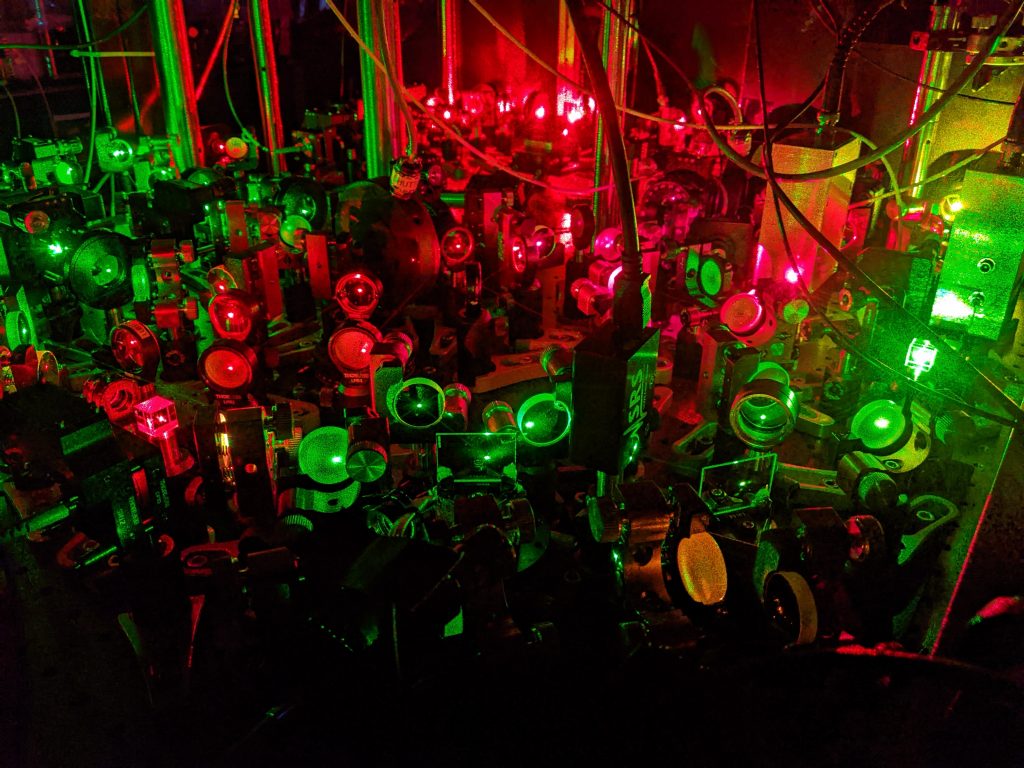
Physicists in the US have created ultracold polyatomic molecules by trapping and cooling them directly in three dimensions. Led by John Doyle at Harvard University, the team used a standard device known as a magneto-optical trap (MOT), plus additional laser cooling techniques, to reduce the temperature of a sample of calcium hydroxide (CaOH) molecules to just 110 µK. By showing that direct laser cooling is possible, the result opens the door to experiments in molecule-based quantum simulation and studies of chemical reactions involving polyatomic molecules.
Physics World: Quantum teleportation expands beyond neighbouring nodes
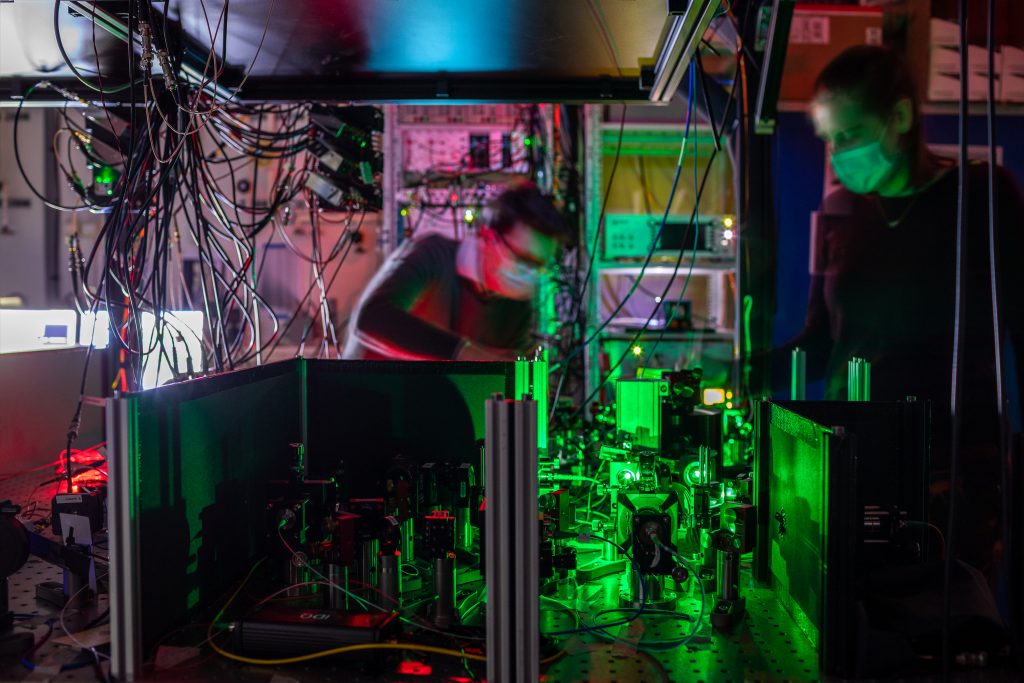
Physicists in the Netherlands have shown for the first time that quantum information can be reliably teleported between network nodes that are not directly connected to each other. According to the researchers, who created the world’s first three-node quantum network at QuTech (a collaboration between the Delft University of Technology and TNO) in 2021, the latest work marks a further step towards a scalable quantum Internet.